

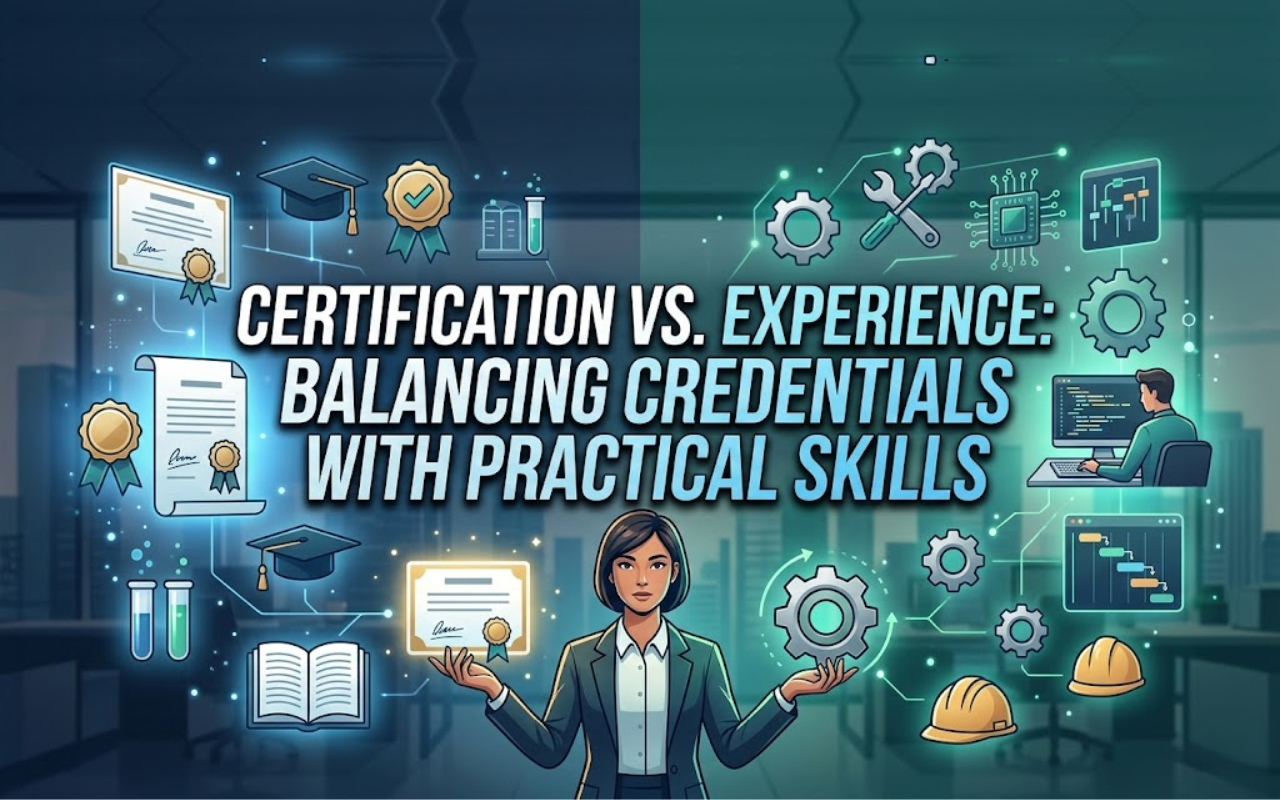
In the cybersecurity industry, one question continues to divide professionals and hiring managers alike:
Do certifications matter more than experience?
As the threat landscape evolves and organizations face increasingly sophisticated attacks, companies need security professionals who are both knowledgeable and capable. But should that knowledge come from formal certifications—or from hands-on experience in the field?
The truth is, it’s not an either-or debate. The strongest cybersecurity careers are built on a strategic balance between credentials and practical skills.
Let’s break it down.
🎓 When Certifications Matter Most
Cybersecurity certifications serve several important purposes:
1️⃣ They Validate Foundational Knowledge
Certifications like ISC2’s CISSP or CompTIA Security+ demonstrate that a professional understands standardized security principles, frameworks, and terminology.
For entry-level professionals, certifications:
-
Provide structured learning paths
-
Help break into the industry
-
Demonstrate commitment to professional growth
For employers, certifications offer:
-
A quick benchmark of technical knowledge
-
Risk reduction in hiring decisions
-
Compliance alignment in regulated industries
2️⃣ They Support Regulatory and Contractual Requirements
Certain industries—finance, healthcare, government—require certified personnel for compliance. In these cases, certifications are not optional; they’re mandatory.
3️⃣ They Enhance Career Mobility
Certifications can open doors internationally and across industries. A recognized credential often travels further than job experience limited to one organization.
🛠️ When Experience Matters More
While certifications validate knowledge, experience proves capability.
Here’s where experience becomes critical:
1️⃣ Real-World Incident Handling
Reading about incident response is very different from responding to a live ransomware attack at 2 a.m.
Hands-on experience develops:
-
Decision-making under pressure
-
Communication during crisis
-
Practical tool usage
-
Adaptive thinking
2️⃣ Tool Proficiency and Operational Skill
Security professionals working daily with SIEM tools, EDR platforms, vulnerability scanners, and cloud security environments develop muscle memory and efficiency that no exam can replicate.
3️⃣ Contextual Judgment
Experience teaches nuance:
-
When to escalate
-
When a vulnerability is truly critical
-
How business impact influences risk decisions
This contextual intelligence cannot be memorized—it must be developed.
⚖️ The Problem with Choosing Only One
❌ Certifications Without Experience
Professionals may pass exams but struggle with:
-
Practical troubleshooting
-
Real-time analysis
-
Stakeholder communication
This creates a credibility gap in technical interviews.
❌ Experience Without Structured Learning
On the other hand, professionals relying only on experience may:
-
Develop knowledge blind spots
-
Miss updated frameworks and evolving standards
-
Struggle with career advancement where certifications are required
Balance prevents stagnation.
🎯 Finding the Optimal Balance
Here’s how cybersecurity professionals can strategically combine both:
🔹 Early Career (0–3 Years)
Focus on:
-
Entry-level certifications (e.g., Security+, CEH, etc.)
-
Internships or lab environments
-
Home labs and CTF participation
Goal: Build credibility + practical exposure.
🔹 Mid-Level (3–7 Years)
Focus on:
-
Specialization (cloud, SOC, red team, governance)
-
Advanced certifications aligned with your role
-
Leadership in real projects
Goal: Deepen expertise while formalizing knowledge.
🔹 Senior-Level (7+ Years)
Focus on:
-
Strategic certifications (CISSP, CISM)
-
Architecture, leadership, or governance responsibilities
-
Mentorship and knowledge sharing
Goal: Blend authority, credibility, and influence.
🧠 What Hiring Managers Really Look For
Strong hiring decisions typically prioritize:
-
Demonstrated problem-solving ability
-
Clear communication
-
Practical tool familiarity
-
Evidence of continuous learning
-
Cultural and team fit
Certifications may get you shortlisted.
Experience often gets you hired.
But professionals who combine both are the most competitive.
🚀 The Future of Cybersecurity Careers
As automation, AI-driven threat detection, and cloud transformation reshape the industry, adaptability becomes critical.
Certifications help you stay current.
Experience helps you stay effective.
The most resilient cybersecurity professionals understand that credentials open doors—but competence keeps them open.
🔍 Final Takeaway
The debate between certification and experience is not about choosing sides.
It’s about building:
-
Structured knowledge
-
Practical capability
-
Strategic career progression
In cybersecurity, credibility comes from what you know.
Authority comes from what you can do.
The real advantage lies in mastering both.