

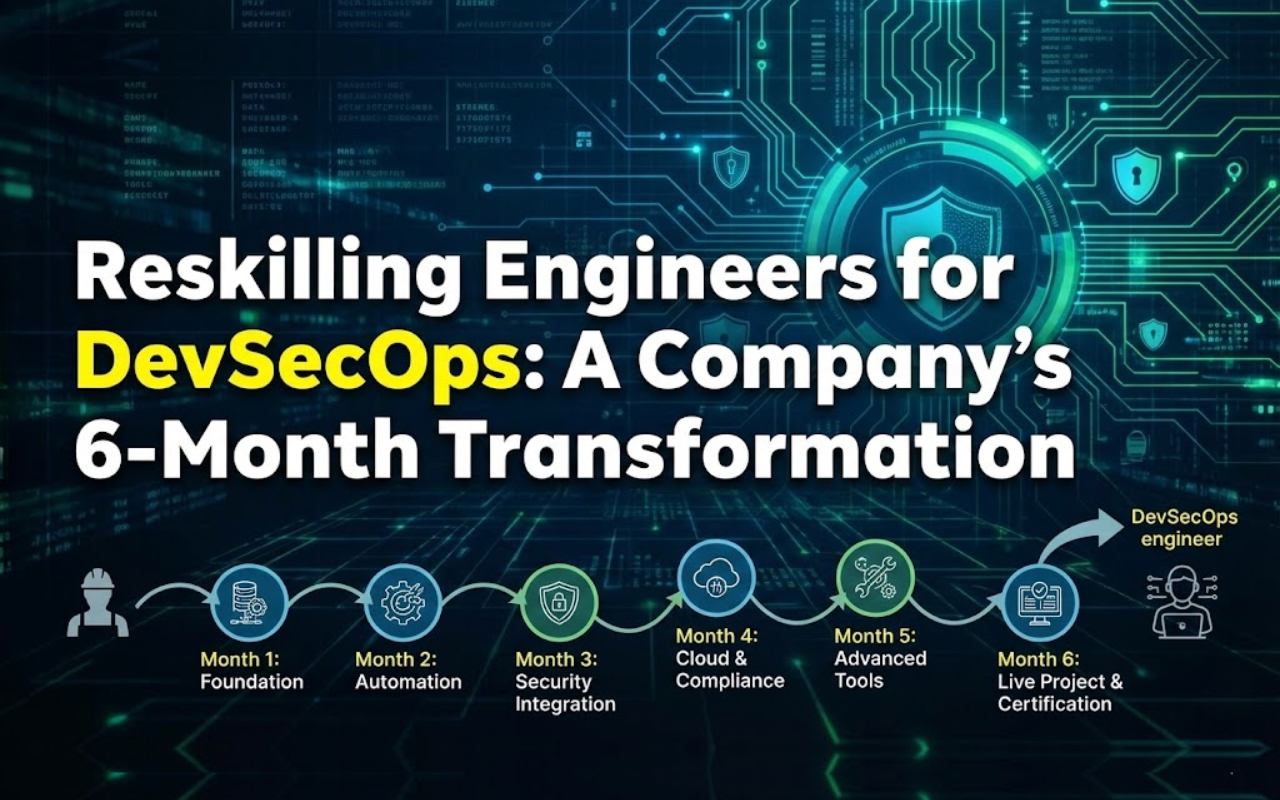
In today’s fast-paced software environment, speed and security must coexist. Many organizations face a skills gap: traditional software engineers are not always trained to embed security into CI/CD pipelines. This case study explores how one company successfully reskilled its engineering team into DevSecOps engineers over six months, transforming both its culture and security posture.
Background
The company, a mid-sized SaaS provider, had experienced a few near-miss security incidents due to:
-
Inconsistent CI/CD pipeline security
-
Lack of automated security testing
-
Minimal understanding of infrastructure-as-code (IaC) security
Recognizing the need for a proactive approach, leadership initiated a structured reskilling program to equip existing developers with DevSecOps expertise.
Program Structure
The reskilling program was designed around three key pillars:
1. Core DevSecOps Training
-
Pipeline security: Securing Jenkins, GitLab CI, and GitHub Actions pipelines
-
Automation: Integrating SAST, DAST, and dependency scanning into CI/CD
-
Infrastructure-as-Code security: Scanning Terraform and CloudFormation templates for misconfigurations
2. Hands-On Labs and Simulation
-
Live pipeline exercises with secure build environments
-
Container and Kubernetes security simulations
-
Mock incidents to test threat detection and response
3. Mentorship and Continuous Feedback
-
Senior security engineers paired with developers for on-the-job guidance
-
Bi-weekly feedback sessions to measure progress and address challenges
-
Metrics tracked included pipeline vulnerabilities caught pre-production and time to remediate security findings
Outcomes
After six months, the company achieved remarkable results:
-
80% of engineers fully capable of managing CI/CD security
-
Automated security checks integrated into all pipelines
-
Reduction of security misconfigurations by over 60%
-
Improved cross-team collaboration between development, operations, and security teams
-
Greater awareness and adoption of DevSecOps culture throughout the organization
The program not only enhanced security but also boosted employee confidence and engagement, creating a foundation for continuous improvement.
Lessons Learned
Several key takeaways emerged from this transformation:
-
Start with existing talent: Reskilling leverages the company’s knowledge base while filling the security gap.
-
Structured, hands-on programs are critical: Practical labs ensure theoretical knowledge translates into real-world skills.
-
Measure outcomes, not just participation: Track metrics like pre-production vulnerabilities and remediation time to prove ROI.
-
Cultural change is essential: DevSecOps succeeds when security becomes a shared responsibility across teams.
Conclusion
Reskilling engineers into DevSecOps professionals is not just a training initiative—it’s a strategic investment in secure, agile, and scalable software delivery. Organizations that embrace structured programs, hands-on experience, and cultural alignment can close the skills gap while accelerating innovation.
For companies looking to strengthen security without sacrificing speed, this case study demonstrates a proven roadmap for transforming development teams into proactive security champions.
#Reskilling #DevSecOps #TeamTransformation #SkillsDevelopment #EngineerTraining